If you have spent an hour on the portals looking at Berkeley, you have probably seen three different medians. Redfin put the March 2026 sale median at $783,000, down 8% year over year. Movoto put the May 2026 listing median at $850,000. Homes.com's trailing twelve-month average sale price came in around $1,023,886, up roughly 7%.
Those numbers are not sloppy. They are describing two different Berkeleys stacked on top of each other, and once you see the split, the neighborhood stops looking confusing and starts looking legible.
The split, in one sentence
Berkeley in 2026 is a resale bungalow market and a new-construction duplex market operating side by side, and they are moving in opposite directions.
The bungalow resale line has softened. The new-build duplex line has kept climbing. The "median" you see on any given portal is a weighted average of two markets that are not really competing with each other.
That matters because your budget does not shop the median. It shops one of the two lanes.
What the resale lane looks like right now
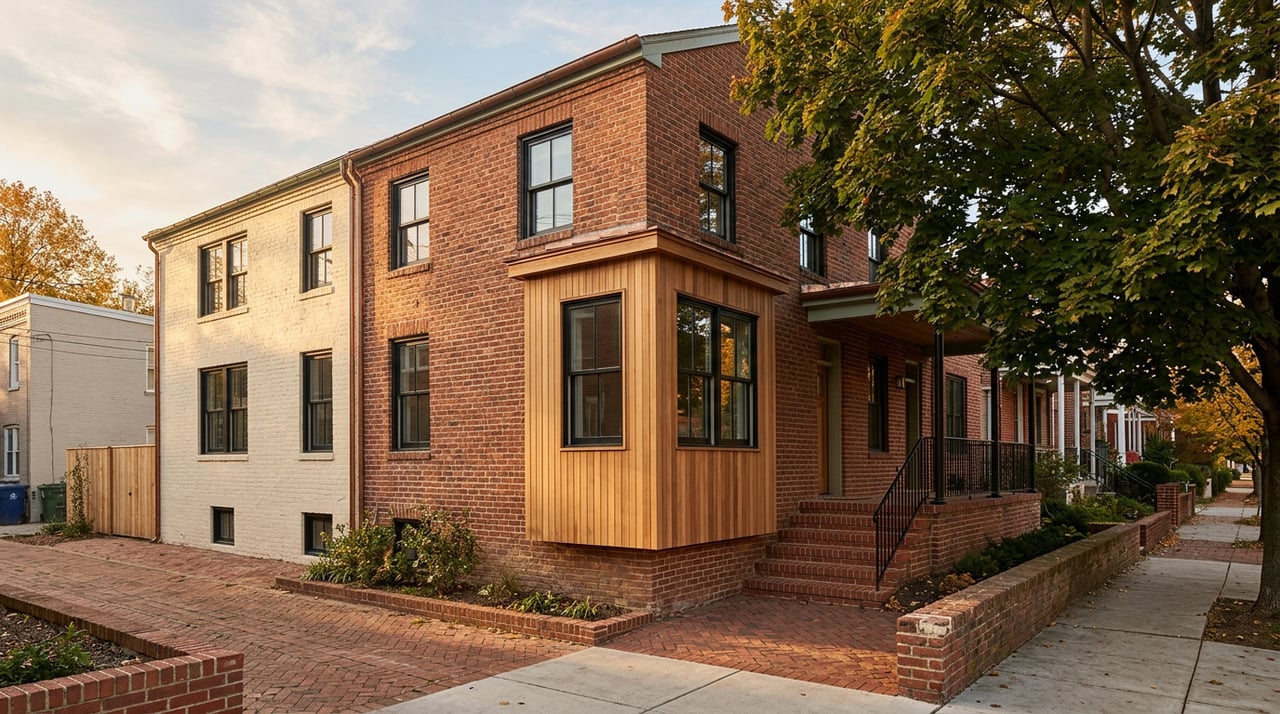
The resale lane is where you find 1910s and 1920s brick bungalows, brick Tudors, small Denver Squares, and the older half-duplexes off Perry, Utica, and Xavier. Redfin's March 2026 read of $783K down 8% is largely this lane. The Denver metro median over the three months ending May 2026 was $635,000, up 2.5% year over year, so Berkeley bungalows are underperforming the metro on price change while still selling well above the metro median in absolute dollars.
A few things are showing up in the listing language that tell you the friction is real:
- Explicit "this is a scrape, no showings unless under contract" listings, which is a signal that the improvement has no residual value and the seller is pricing dirt.
- Seller-paid rate buydowns being advertised in the listing headline (a Year 1 rate of 3.99% and Year 2 of 4.99% appeared on one Berkeley ADU listing).
- Homes sitting long enough for price adjustments to become normal again. Movoto's May 2026 read of 39 median days on market is a materially different negotiation environment than the 15 to 20 days Berkeley saw at its peak.
Median price per square foot on the resale side sat around $491 in May 2026, per Movoto, down about 2% year over year.
For a buyer, this lane rewards patience, a real inspection, and a willingness to walk on deferred maintenance. Foundations, sewer scopes, and knob-and-tube remnants are the three things that most often move price in this vintage of Denver housing.
What the new-build lane is doing
The new-build lane is a different product, priced by a different logic, sold to a different buyer.
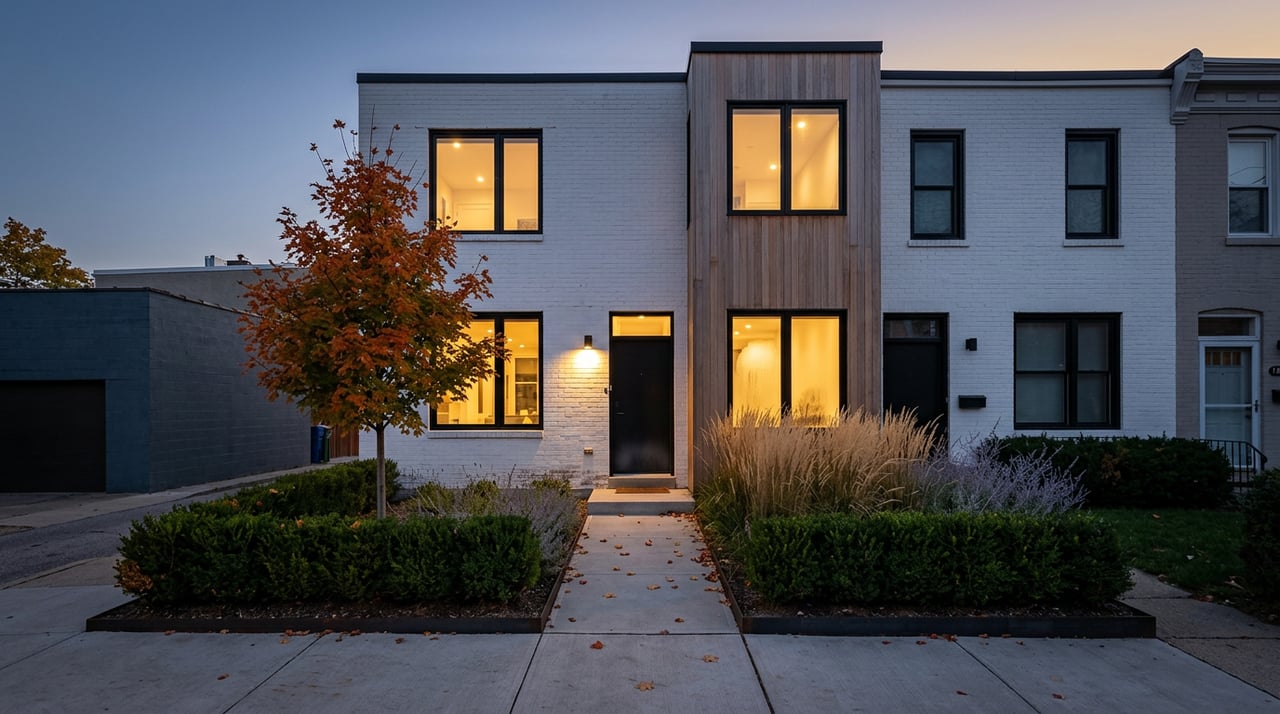
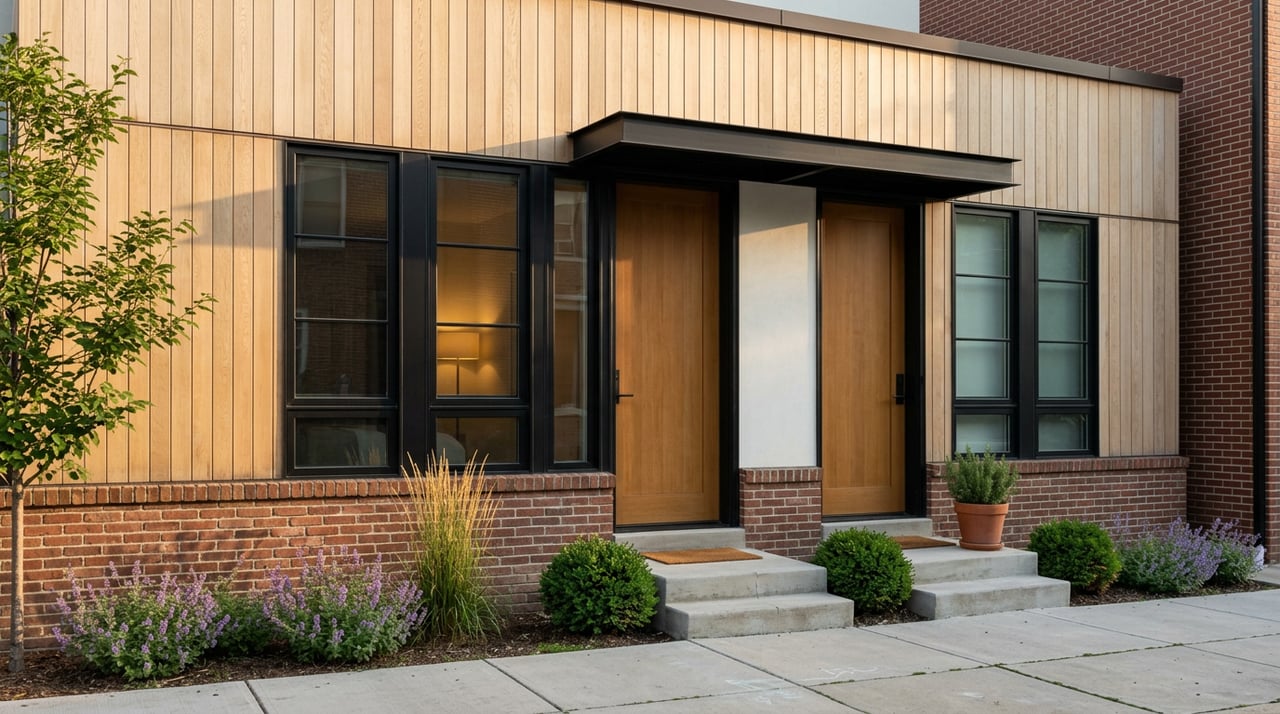
Homebound has an active cluster on Utica Street between 44th and 46th, with units at 4512, 4514, 4520, 4535, and 4537 under construction as of mid-2026. The 2,365-square-foot floor plans (three bed, three bath) are shown with the "Nordic" and "Metro" elevations. The larger 3,353-square-foot floor plans on the same block show the "Alpine" elevation, four beds and four baths, with April and July 2026 completions. MAG Builders is delivering side-by-side duplex product a block off Tennyson with Dacor kitchens, European white oak flooring, and Zellige backsplashes. KLM Construction and a few smaller shops are filling in between them. Down the block, the 44th Townhomes project put fourteen units on Zenobia Street with end units around $585,000 to $625,000, and a separate 25-unit development is delivering in Summer and Fall 2026 with pricing from the mid-$700,000s to $1.4M.
Homes.com's trailing twelve-month average sale of about $1.02M, up 7%, is skewed by this lane. So is the fact that Berkeley has nine active new-construction listings at any given moment, a supply level that would be unremarkable in Central Park but is unusual for a historic inner-ring neighborhood.
Two things are keeping this lane's prices firmer than the resale lane:
- The lots feed a working restaurant corridor. Recent openings within four blocks include Salty Donut (late 2024), Funky Buddha at the north end (November 2024, with a new patio for the 2026 season), Hey Kiddo at 4337 Tennyson (the Michelin Guide-listed Kelly Whitaker and Deuki Hong concept), and a forthcoming second location of Bao Brewhouse at 3973 Tennyson opening this summer. First Friday Cultural Walks run May 1, June 5, July 3, August 7, September 4, and October 2 in 2026.
- Land basis. Once a builder has paid Berkeley land prices, absorbed demolition, and put in modern mechanicals, the pro forma requires a $1.1M-plus sale to pencil. That floor holds even when resale demand softens.
Where the transaction friction actually sits
Buyers who cross from one lane to the other without recalibrating are the ones who get stuck. A few of the specific pressure points:
On the resale side. Sewer scopes and foundation letters are the two inspection items that most often reopen price. A cast-iron sewer line under a century-old bungalow that scopes with bellies or root intrusion typically prices at $8,000 to $18,000 depending on depth and length. That is a real number to hold in reserve during offer strategy, not a hypothetical.
On the new-build side. The friction is in the pre-completion contract, not the inspection. Elevation selection, finish level, and lot premium are often locked in before drywall. Change-order deadlines are tight, and post-close punch lists have to be documented against the builder's warranty language rather than a general contractor's goodwill. Rate buydowns are frequently baked into the price, so the "concession" is smaller than it looks.
On both sides. Denver metro seller concessions ran near 60% of transactions in late 2024, and the pattern has continued into 2026 with rate buydowns, closing cost credits, and appraisal-gap protection all showing up on individual contracts. The concession structure is where a well-run negotiation actually earns its keep.
Which lane fits which buyer
A short frame:
- The 1912 brick bungalow near Rocky Mountain Lake Park at $775,000. You are buying land, a walkable block, and a floor plan you will likely renovate. Expect an inspection dialogue and a reserve line for mechanicals.
- The Homebound Utica Street duplex at $1.25M. You are buying finished square footage, a rooftop, a warranty, and one block to Tennyson. Expect a builder contract, a design meeting, and less negotiation on price than on credits and upgrades.
- The 44th Townhomes end unit at $600,000. You are buying the price of admission to the corridor at attached-product economics. Expect an HOA, a smaller footprint, and the shortest walk to First Fridays of any of the three.
None of these three homes is priced off the same median.
FAQ
Why do the portals disagree on Berkeley's median?
Because they are measuring different windows and different product mixes. Redfin's March 2026 read of $783K reflects closed sales that month, which skewed toward resale. Homes.com's roughly $1.02M average is a rolling twelve-month figure that captures more of the new-build closings. Both numbers are correct for what they are counting.
Is Berkeley a "buyer's market" right now?
The resale lane has moved closer to balance. Days on market are longer, concessions are common, and price reductions are visible. The new-build lane is still firm because builders control supply and finance holding costs. So the answer depends on which lane you are shopping.
What is the practical difference between a Berkeley duplex and a Berkeley half-duplex?
Denver zoning treats them as different products. A newer side-by-side duplex is typically fee simple with a party wall agreement and no HOA. A half-duplex from the 1920s often has legacy easements and shared systems that need to be verified in title. That verification step is where the transaction can slow.
Are the new-construction rate buydowns worth it?
Sometimes. A 3.99% first-year rate reduces monthly cash flow, but the buydown is usually funded from a seller credit that could otherwise have been taken as a price reduction. Running both scenarios against your intended hold period is the honest way to decide.
If you want a read on your specific block
Berkeley is not one market this year. It is two, and the one you should be shopping depends on what you actually want to own. If you would like a walk-through of which lane your budget lives in, which blocks are moving, and what a clean offer looks like on either side, Stephanie Vail is happy to sit down and map it out with you. Book a Consultation.