Pull up Platt Park on five different real estate portals in mid-2026 and you get five different medians. Redfin shows $984,669 for May. Orchard's trailing 30 days lands at $1,084,500 on just twelve sales. Homes.com reports a trailing-twelve-month median of $877,500, down 6% year over year. Realtor.com's April 2026 sold median comes in at $795,000. A Denver market summary from late spring pegs the number around $965,000.
None of those numbers are wrong. They are describing four different homes.
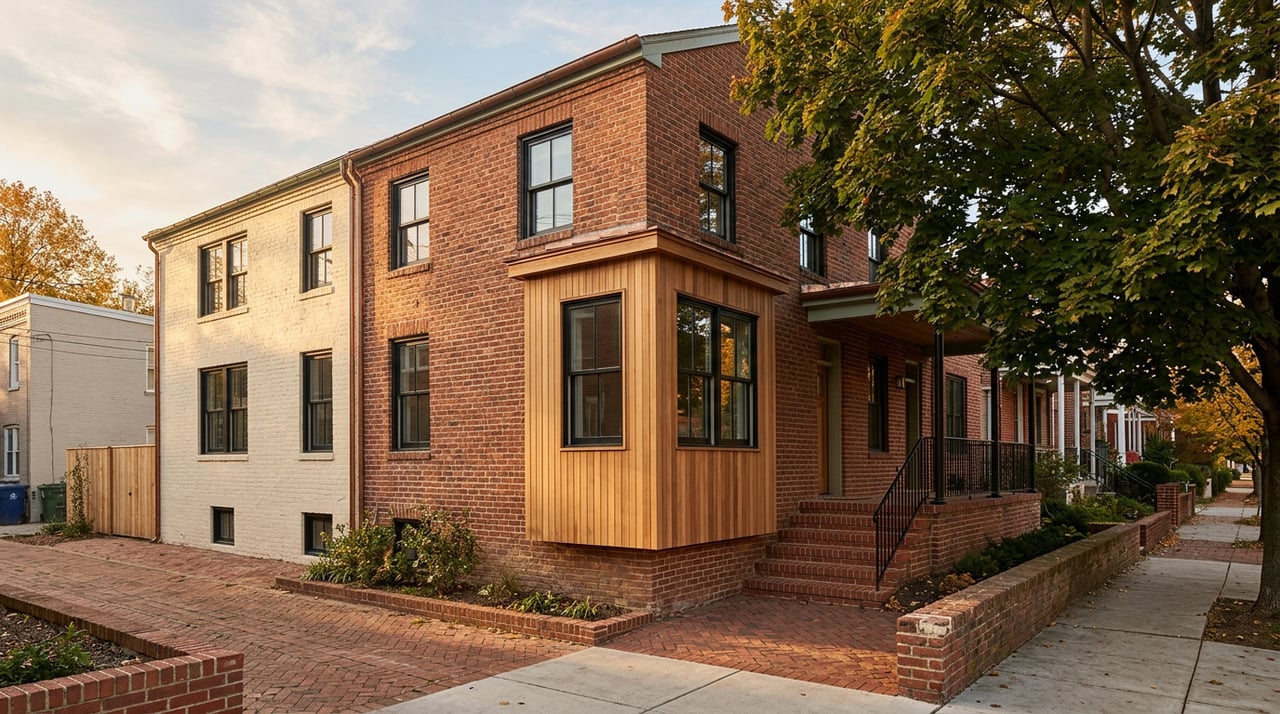
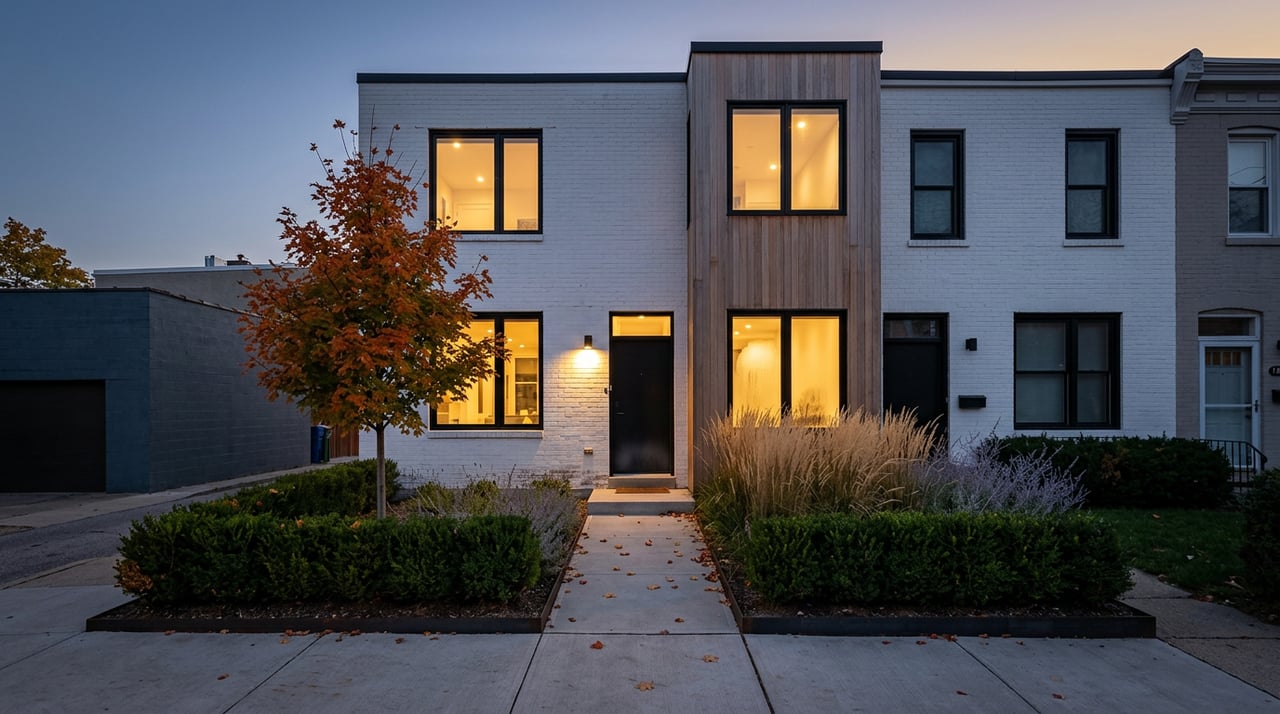
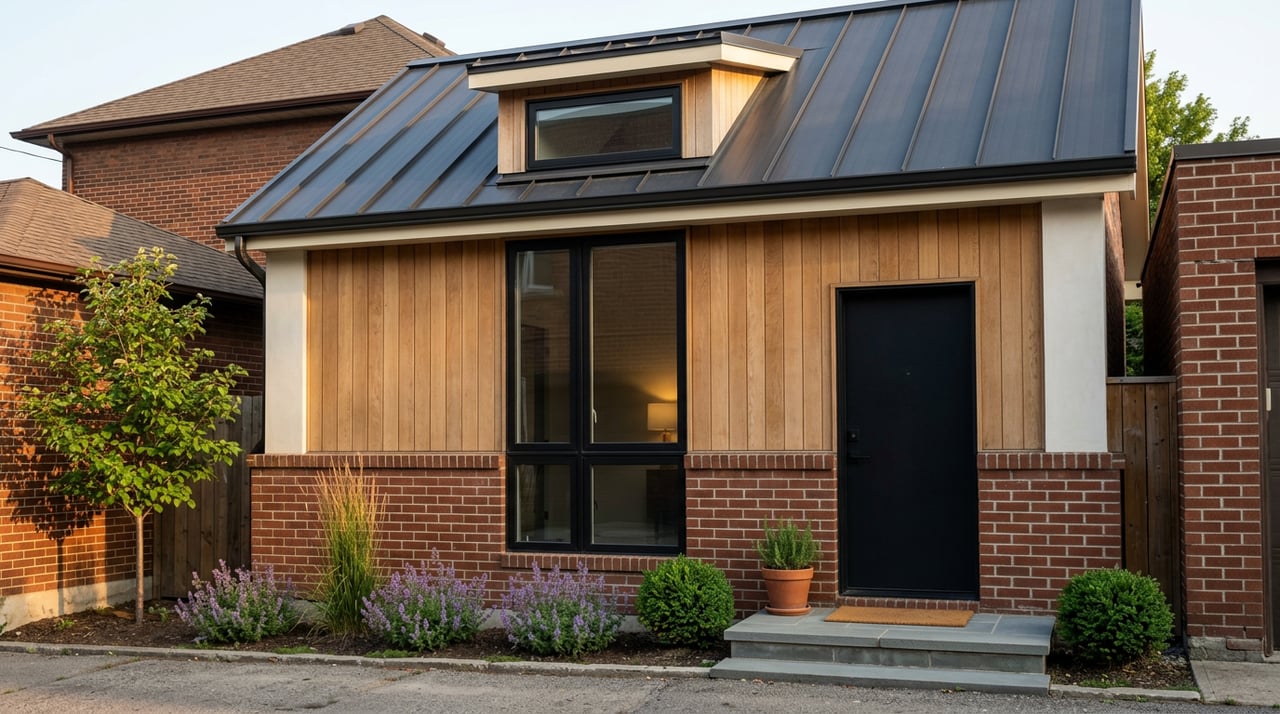
Platt Park's roughly one square mile between Mississippi, Broadway, Evans, and Downing contains a 1920s brick bungalow lane, a renovated-Tudor-and-pop-top lane, a new-construction duplex lane clustered near the Louisiana–Pearl light rail station, and, as of December 16, 2024, a fourth lane that most buyers still are not pricing in: a bungalow with a legal accessory dwelling unit tucked behind it. The gap between those lanes is where the real decision lives.
Start with what breaks first, not what looks best
Before we get to the pricing, a piece of transaction friction that decides which lane is actually the cheaper one.
Roughly two-thirds of the detached stock in Platt Park was built between about 1905 and 1935, when Craftsman bungalows, Denver Squares, Spanish Revivals, and a scatter of William Lang Victorians filled in around the old Denver Tramway trolley line on South Pearl. Homes from that era were connected to the city sewer with clay tile, drained on cast iron, supplied by galvanized steel, and wired with knob-and-tube or early cloth-wrapped circuits. Denver inspectors consistently flag partial upgrades in these houses: a remodeled kitchen with PEX above a basement still running on corroded galvanized supply, or a new panel feeding two original knob-and-tube circuits in the attic.
The numbers a buyer needs at the table:
- A sewer scope runs $150 to $300. A full sewer line replacement on a Platt Park clay-tile run typically lands between $7,000 and $15,000, and some deeper repairs stretch to $25,000.
- Replacing galvanized supply with PEX or copper in a Denver bungalow runs $4,000 to $8,000.
- Upgrading a Federal Pacific or Zinsco panel to a modern 200-amp service averages $2,500 to $4,000. Some insurers will not write a policy on the older panels at all.
- Radon mitigation, which comes up often in Platt Park because Colorado sits in EPA Zone 1, runs about $800 to $1,500.
Stack those together and a "charming original" bungalow at $780,000 with three deferred systems can carry $20,000 to $35,000 of near-term work that a comparable renovated house at $920,000 has already absorbed. The renovation premium is real. It is also often less than the deferred-maintenance discount looks like on the listing page.
Four lanes, one price sheet
Here is what the same neighborhood produces in mid-2026, sorted by product rather than by portal:
| Lane | Typical 2026 range | What it usually is | Where the risk lives |
|---|---|---|---|
| Original bungalow | $640K–$820K | 2–3 BR, 900–1,400 sq ft, 1920s brick, unfinished or lightly finished basement | Sewer, panel, HVAC, foundation on bentonite clay |
| Renovated bungalow or Tudor | $850K–$1.2M | Pop-top or basement dig, updated systems, 3–4 BR | Quality of finish, permit history on additions |
| New-construction duplex or scrape-and-build | $1.1M–$1.9M | 3–4 BR sides, 2,500–3,500 sq ft, all-brick, triple-pane, PBG-tier | New-build punch list, HOA structure on duplex |
| Detached full new build | $1.9M–$2.9M | 4–5 BR, 4,000–6,000 sq ft, 11-ft ceilings | Lot scarcity, appraisal ceiling |
The March 2026 Homes.com snapshot showing houses between $520,000 and $2,890,000 is not describing a wide market. It is describing four narrow ones stacked together.
What actually changed in December 2024
Denver spent decades treating accessory dwelling units as an exception you had to earn. Individual property owners rezoned lot by lot. Whole neighborhoods argued about whether to allow them. Platt Park was one of the earlier zip codes to open up, which is part of why the listing right now advertising an attached ADU that "historically rented for an average of $2,700 per month" is not a novelty.
Then two things happened almost at once.
Colorado passed HB24-1152 in 2024. Denver adopted a citywide zoning text amendment (CB24-1303) that took effect December 16, 2024. Together they did four things that matter to a Platt Park buyer:
- ADUs are now permitted in every Denver zone that allows a single-family home. The Denver ADU page lists no minimum lot size and no additional parking requirement for the ADU itself.
- The owner-occupancy rule is gone. You can rent the primary house and the ADU to separate long-term tenants.
- HB24-1152 voided outright HOA bans and prevents Denver from applying design standards to ADUs stricter than those it applies to primary dwellings.
- The state and city ceilings remain: detached ADUs cap at 1,000 sq ft on lots over 7,000 sq ft, 24 ft or 1.5 stories in height, sited within the rear 35% of the lot.
The city's own cost line is a small but real signal of how quickly this is moving. The Denver Water ADU System Development Charge is $2,055 through June 30, 2026, and steps up to $2,170 on July 1, 2026.
How the fourth lane reprices the first one
For a decade, the original bungalow lane was priced against itself. A $780,000 Craftsman on South Lincoln with a decent lot was compared to other $780,000 Craftsmen with decent lots.
The math after December 2024 is different. A 490 sq ft detached modular ADU in Denver runs $245,000 to $285,000 all-in, with permits and utility tap usually landing between $7,000 and $13,000 of that. At an achievable Platt Park rent in the $2,200 to $2,900 range for a well-built one-bedroom, the ADU produces gross rent of roughly $28,000 to $34,000 a year against a build cost that is now legal to finance on almost any Platt Park lot with alley access and rear-yard geometry that fits the bulk plane.
That reprices the bungalow lane in two ways worth naming plainly:
- A bungalow on a 4,700 sq ft lot with no alley and a tight rear setback is worth less than a functionally identical bungalow on a 6,250 sq ft double lot that clears the bulk-plane envelope. Before December 2024, those two houses were often listed within $20,000 of each other. In mid-2026, the second lot carries an option value the first does not.
- The scrape-and-build math got harder for smaller developers. A larger new-construction duplex still pencils on a double lot near the light rail. But the mid-tier scrape, where a builder took a $700,000 bungalow to a $1.4 million single-family, now competes with a $780,000 bungalow plus a $270,000 ADU that produces cash flow while a family lives in the main house.
The Denver Gazette in March 2026 documented this same pattern one neighborhood south in Harvard Gulch and Rosedale: newer enlarged homes at one-point-something million next door to originals in the mid-six-figures. Platt Park is running the same play with the ADU rule stapled to it.
What a specific budget actually gets you
A rough sort of where each budget lands after inspection, financing, and the ADU option is priced in:
- $700K to $825K. Original bungalow, likely with a scope-flag on the sewer, a panel that needs attention, and one HVAC system near the end of its service life. Look hard at the lot. If the rear yard, alley, and zoning combine to allow a future ADU, that lot is doing work the listing price does not fully show.
- $825K to $1.05M. The most crowded band. Renovated bungalows, Tudors with three bedrooms on one floor, small pop-tops. Most of what shows up in the reported "median" lives here. The deciding factor is usually finish quality and whether the addition was permitted.
- $1.05M to $1.5M. New-construction duplex sides from builders concentrated near the Broadway corridor and Louisiana–Pearl station. All-brick, triple-pane, engineered white oak, small yard. The trade is space for maintenance.
- $1.5M and up. Full detached new builds and the top of the Victorian and custom-ranch stock. Custom 1891 William Lang Victorians and 4,600 sq ft ranches on double lots both live in this band, which is why the top of the market looks so uneven.
Two questions worth asking before you tour anything
Does this lot support an ADU under the current bulk-plane rules? Almost every Platt Park lot answers yes on zoning after December 2024. Fewer answer yes on geometry, because the rear 35% siting rule, side setbacks, and 24 ft height limit interact with existing garages, alleys, and mature trees. The answer changes the value of the lot regardless of whether you ever build.
What did the sewer scope actually show, not what did the seller disclose? A "recently updated" note in the listing often means the interior line was replaced from the wall to the basement floor. The clay tile between the foundation and the tap under South Pearl is usually still original.
FAQ
Which median should I actually trust? None of them alone. Look at price per square foot on the specific lane you are shopping. Redfin's $505 per foot in May 2026 and Orchard's $440 per foot on a smaller sample tell you the mix shifted, not that values collapsed.
Can I count ADU rent when I qualify for the mortgage? Some lenders will consider projected ADU rent on a purchase if you have a signed lease or an appraiser's rent schedule. Most will not. That is a conversation to have with your lender before you write, not after.
Is a scrape-and-build still worth doing in Platt Park? It depends on the lot and the builder. The double-lot listings, and the corners, still pencil. The narrow interior lots increasingly pencil better as bungalow-plus-ADU than as full scrape.
If you are trying to price the difference between these lanes on a specific block, or work out whether a lot supports an ADU before you write an offer, that is exactly the read Stephanie Vail does with clients in Platt Park. Book a consultation and we will look at the map, the zoning, and the scope report together.