If you pulled three portals up on your phone this week, City Park showed you a median of $415,000, or $825,000, or $747,461, or something north of $900,000, depending on which page you landed on. None of those numbers are wrong. They are all describing the same eighty-block sliver of Denver at the same moment in 2026. The reason they disagree has almost nothing to do with the market and almost everything to do with the shape of the neighborhood itself.
Before you decide what your budget buys here, it helps to understand why a single building can move the number by half a million dollars.
Start with the transaction risk, because it is the part portals do not show
If you write an offer on a Pinnacle at City Park South condo this summer, the piece of paper that matters most is not the inspection report. It is the reserve study.
Colorado's HB22-1387 reserve-study framework took effect January 1, 2025, and the state's HOA landscape has kept tightening since. The Common Interest Ownership Act now expects associations to adopt written reserve policies, keep studies on file, and disclose capital reserve balances in annual reports. There is no statutory minimum balance in Colorado, which means the disclosure itself is where a buyer earns or loses leverage. A 2006-vintage two-tower high-rise with pool decks, guest suites, wine rooms, and 24-hour concierge staff has a very different thirty-year capital curve than a 1910 brick Denver Square with a detached garage.
That single distinction is what actually separates City Park's two markets. Everything downstream, including the median-price argument, follows from it.
The neighborhood is smaller than the number implies
The residential part of City Park is a strip roughly a mile long and two blocks wide, tucked between the 330-acre park to the north and Colfax Avenue to the south. The park itself takes up most of the neighborhood's map footprint. Population sits near 3,000. Housing tenure runs roughly 68% renter and 32% owner.
Into that footprint, drop one building: The Pinnacle at City Park South. Two towers, twenty-seven and twenty-two stories, 268 units combined, designed by Opus and delivered in two phases wrapping 17th Avenue and Fillmore Street. Floor plans range from 850-square-foot one-bedrooms to roughly 4,600-square-foot four-bedroom penthouses. HOA dues sit in the $700 to $1,000 monthly band, covering reserves, insurance, grounds, and security.
Because The Pinnacle turns over multiple units in any given quarter, and the pool of detached single-family sales on the two-block strip is much thinner, a "City Park median" that mixes attached and detached is doing something closer to a Pinnacle sale-price survey than a neighborhood read.
What the price curves actually look like right now
Two overlapping curves are hiding inside every headline number.
The attached curve. Current Pinnacle listings mid-2026 run roughly $500,000 for an 850-square-foot one-bedroom on the fifteenth floor, into the $700,000s for two-bedroom park-facing units, and past $1.15 million for high-floor two-bedrooms with mountain lines of sight. Views, floor, and direction move the number more than square footage does. A north-facing unit staring into the park behaves like a different asset than a south-facing unit looking down 17th.
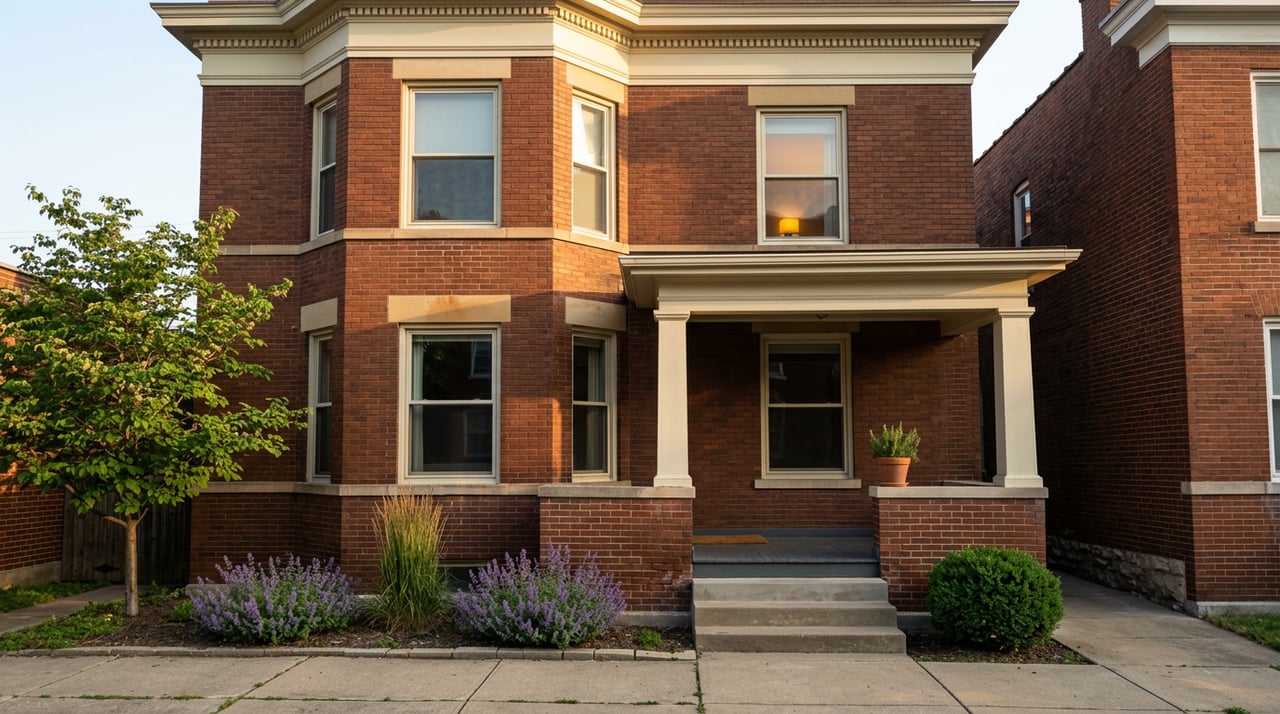
The detached curve. 5280's 2026 neighborhood ranking put City Park in the top five for the first time, citing a 23% jump in average sale price, the largest among all 78 Denver neighborhoods the magazine tracks, and pegging a "signature Denver Square" north of $900,000. That figure lines up with what current listings across from the park and on the two-block residential strip are asking, and it describes a very specific product: two-story red brick, sandstone lintels, dentil cornices, small fenced backyards, detached one-car garages, and East High School's 1925 Beaux-Arts silhouette a few blocks southwest.
Those two curves do not overlap. They intersect statistically inside portal aggregations and produce a "median" that describes neither.
| What you are buying | Rough 2026 range | What is driving the number |
|---|---|---|
| Pinnacle one-bedroom, mid-floor | $500K–$590K | Floor level, HOA coverage, view direction |
| Pinnacle two-bedroom, park-facing | $700K–$800K | Balcony orientation, corner exposure |
| Pinnacle three- or four-bedroom, high floor | $1.15M+ | Height, mountain line of sight, upgrades |
| Historic Denver Square, walkable to park | ~$900K+ | Original brick, lot, garage, block position |
| Craftsman bungalow or Tudor revival | Varies widely | Renovation depth, alley access, ADU potential |
The table is a simplification. The point is that a portal cannot know which row you actually want, so it averages across all of them and produces a number that describes no available home.
Where the friction actually shows up in a transaction
Two very different sets of problems land on the closing table depending on which curve you shop.
For a Pinnacle purchase, the diligence work is almost entirely financial. Read the reserve study. Look at the last three years of assessments. Ask whether any capital projects are on the twenty-four-month horizon: elevator modernizations, curtain-wall sealant, pool-deck waterproofing, garage post-tensioning. In a 268-unit building where dues already cover concierge and amenities, a shortfall in reserves shows up as a special assessment rather than a rent-style increase, and it can arrive after you close. Colorado does not set a statutory minimum reserve balance, so a well-funded building and a thinly funded building can sit on the same block and look identical from the sidewalk.
For a Denver Square or bungalow purchase, the diligence is almost entirely physical. Homes on this strip were built roughly 1895 to 1925. Expect knob-and-tube remediation, cast-iron sewer laterals worth scoping, sandstone lintels that may need repointing, and the very Denver question of whether the alley-side detached garage sits on its original footings or has been rebuilt. Marketing time here reflects the diligence load: detached homes in City Park spend meaningfully less time on market once priced correctly than the attached inventory does, which is a clue that buyers price the risk faster than they price the finish level.
The two closings barely resemble each other. Mixing their comps to justify a price is the single most common way a City Park deal goes sideways.
What a specific budget actually buys
Take $750,000 as an example, because it sits inside both curves.
On the attached side, that number opens the door to a two-bedroom Pinnacle unit somewhere in the middle of the tower, likely with a park-side balcony and reasonable views, with monthly carrying costs meaningfully higher than the mortgage line because of the HOA. You are buying amenities, security, and a lock-and-leave lifestyle, and you are buying into a reserve schedule you did not write.
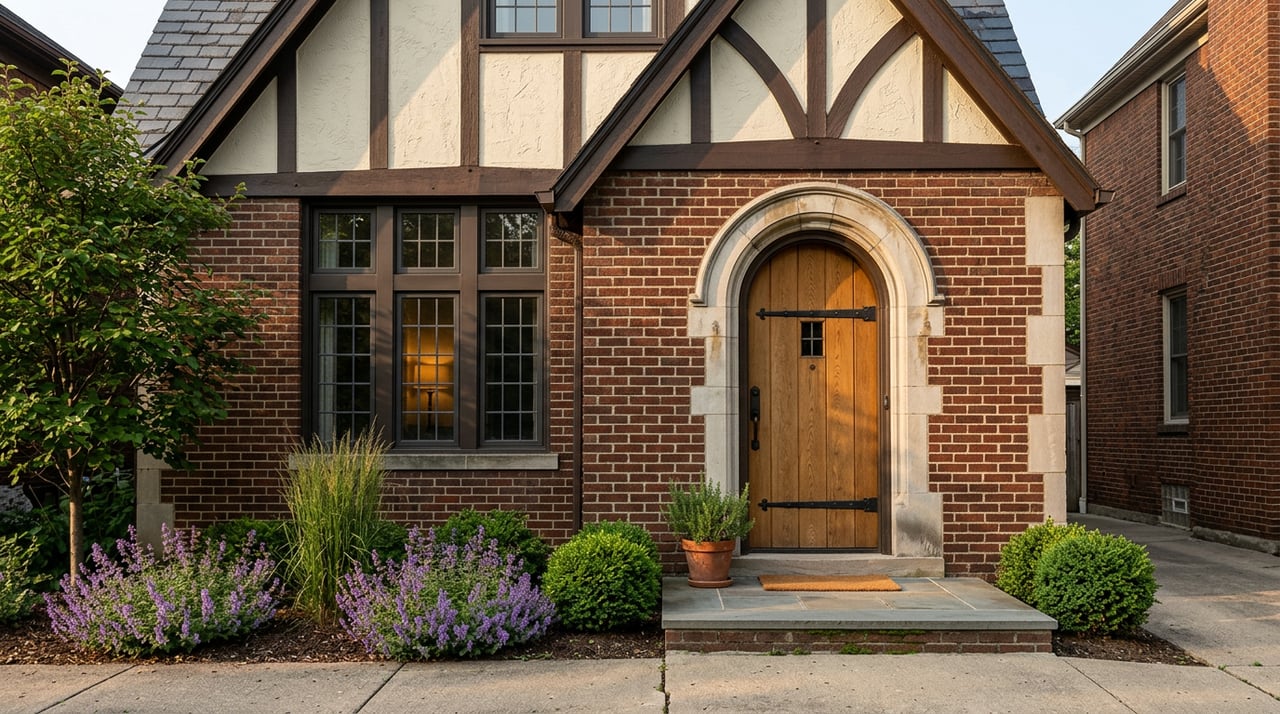
On the detached side, $750,000 is a stretch for a fully renovated Denver Square on the two-block strip and a realistic number for a partially updated bungalow, a smaller Tudor revival, or a Square that still needs a systems refresh. You are buying land, walkability to the Bluebird Theater and the Colfax corridor, and the freedom to renovate without a board vote. You are also buying every deferred-maintenance decision the previous three owners made.
Same budget. Different lives. That is the argument for reading the curves separately before you fall for a median.
Which side of the neighborhood fits which buyer
City Park's residential strip serves two very different resident profiles despite occupying the same zip codes. The Pinnacle side is populated by downsizers, second-home owners, medical-corridor professionals working near Saint Joseph and National Jewish, and travel-heavy households who want the concierge to sign for packages. The detached side is populated by owners who want a yard, a garage, a walk to jazz nights at the Denver Museum of Nature & Science, and the freedom to paint the front door without an architectural committee review.
Buyers who tour both sides in the same weekend and let the "City Park median" set their expectations tend to end up frustrated with whichever side they chose. The number is not describing the choice.
FAQ
Why does one portal show me $415K and another show me $825K for the same neighborhood? The lower number is usually pulling from a data set weighted toward smaller attached units, including one-bedroom condos and the surrounding rental inventory. The higher number is closer to what an owner-occupied detached or larger attached sale looks like. Neither is wrong. They are answering different questions.
Is the Pinnacle the only condo option in City Park? No, but it is the dominant one by unit count within the neighborhood boundary. Smaller mid-rise buildings and a handful of historic conversions exist along 17th and near the Esplanade. None of them approach 268 units, which is why The Pinnacle drives the attached-median math.
What should I ask for before I write an offer on a high-rise unit here? Ask for the current reserve study, the two most recent annual budgets, the minutes of the last four board meetings, any pending capital-project bids, and the insurance master policy declarations page. If the seller cannot produce the reserve study, that itself is information.
Are the historic Denver Squares protected by any preservation overlay? Some blocks fall within local historic districts and some do not. The correct answer for a specific address comes from Denver Community Planning and Development, not from the listing agent's marketing sheet.
If you are trying to read this neighborhood honestly before you write an offer, the median is the wrong tool. The right tool is a conversation about which curve fits your life and which set of diligence questions you are willing to run. Stephanie Vail works with buyers and sellers on both sides of this split, including trust and probate transactions inside older Denver Squares and resale work at towers like The Pinnacle. Book a Consultation when you want a read on the specific building, block, or address you are considering.