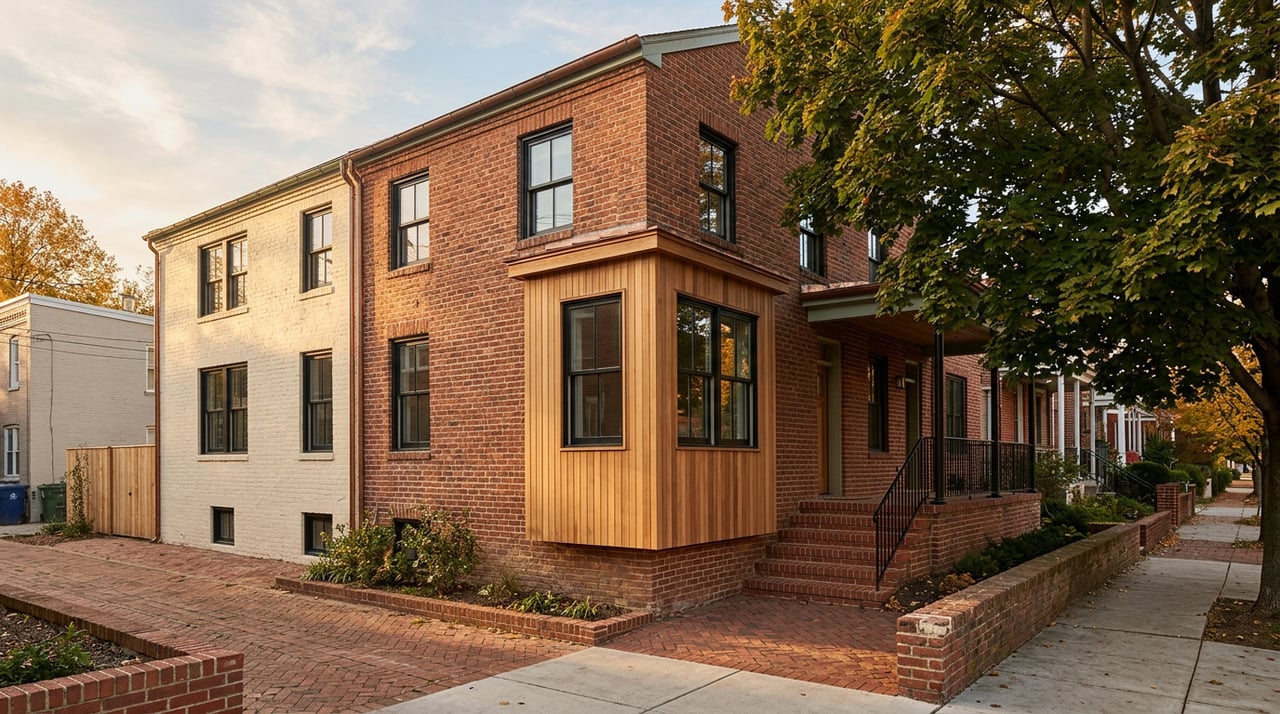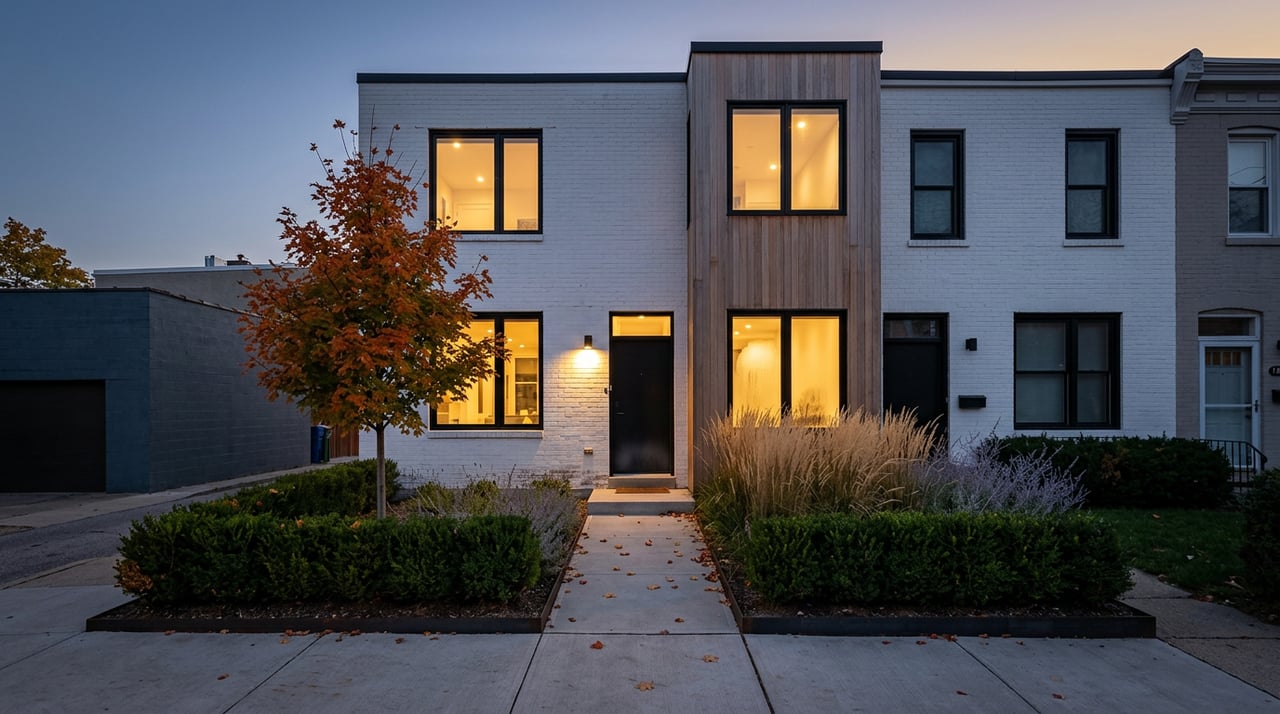

As CBS Colorado reported, in November 2024, the Denver Planning Board sat down to consider a rezoning request for a property at 1630 South Ogden Street in Platt Park. The owners had bought it back in 2022 and sought to split it into a duplex. City planning staff looked at the request and recommended denial. The Planning Board looked at the same request and approved it.
Neighbors opposed the request, and not just because of the duplex. The applicants' attorney was Caitlin Quander, who also chaired the Denver Planning Board. Quander disclosed the conflict and recused herself. The rest of the board approved the rezoning. A subsequent CBS Colorado report said Denver City Council voted 10 to 2 in February 2025 to block the rezoning.
Denver City Council voted to block the rezoning request for a two-unit duplex on South Ogden. A few blocks south on Pearl Street, a proposed five-story building calls for 170 rental units, 14,000 square feet of retail, and 6,000 square feet of office space; a Trader Joe's liquor license application is on file nearby.
The two cases show why buyers should consider each site's zoning history and review status separately.
The five stories on Pearl came from a different vote entirely
Old South Pearl Street built its reputation on a low, walkable scale: a converted trolley corridor of bungalow-adjacent storefronts, farmers market Sundays, and a commercial strip that never grew taller than the neighborhood around it. That reputation is still true on most of the street. It is no longer guaranteed on all of it.
As Denverite reported, in 2023, a stretch of the corridor near Louisiana Avenue was rezoned to allow buildings up to five stories, a change that predates and enables everything that has happened since. Denver-based Kentro Group bought into that upzoned block and, as The Cherry Creek News reported, has spent the past year and a half assembling nine separate parcels at 1261 Pearl Street into a single 1.29-acre site. The proposal on file with the city calls for 170 rental units stacked above 6,000 square feet of office space and 14,000 square feet of retail, with roughly 300 structured parking spaces split between residential and commercial use. As CCD Magazine reported, the design stays within the 64-foot height limit the 2023 rezone allows.
Denverite reported that Kentro's adjacent parcel at 567 East Louisiana Avenue, a shuttered 7-Eleven slated for demolition, has a beer-and-wine liquor license application on file naming Trader Joe's as the applicant. When a reporter asked Trader Joe's directly, the company said it did not have a confirmed new Denver location at that time. Trader Joe's has been expanding steadily across the metro area, including recent openings in Westminster and a planned store at Northfield.
Denverite reported that Kentro already owns and developed the property directly across the street, the block that is home to Duffeyroll Bakery Cafe. This is not a first-time developer testing the neighborhood. It is a firm extending a footprint it already has.
Separately, as Naked Denver reported, the five-story precedent has already been set once. The Ashton on S Pearl, a boutique apartment building, was completed on the same stretch, and its existence is now being used as precedent for another proposal: a request to rezone seven parcels between Buchtel Boulevard and Louisiana Avenue from U-MS-3 to U-MS-5, directly across the street from the Ashton, specifically because that five-story building already sits there.
BusinessDen reported that local developers Kevin Rifkin and Greg Bechler, operating as Outwest Investments, purchased a 1963 building at 1550 South Pearl Street for $1.6 million from a group of physical therapists who had run a clinic there, and in July 2026 submitted plans for a modest two-story replacement: a 2,500-square-foot restaurant and a parking garage on the ground floor, four or five offices above. Rifkin has said the restaurant tenant, not yet finalized, will be significant news for the corridor. It is a fraction of the scale of what Kentro is proposing a short walk away, and it is moving through the same city process.
Here is the pipeline as it stands right now, on one commercial street:
- 1261 Pearl Street: Kentro Group's 170-unit, five-story mixed-use building, nine parcels consolidated, still in city review after filing in 2025
- 567 East Louisiana Avenue: the adjacent parcel with a Trader Joe's liquor license application on file, tied to the same Kentro assemblage
- The Ashton on S Pearl: an already-built five-story apartment building being cited as precedent for further upzoning nearby
- Buchtel to Louisiana, seven parcels: a separate rezoning request from U-MS-3 to U-MS-5, directly across from the Ashton
- 1550 South Pearl Street: Outwest Investments' smaller two-story restaurant and office project, filed in July 2026
Two projects, different review histories
The South Ogden duplex request and the Kentro proposal differ in location and scale. Both sought to allow more density than existed on their respective sites.
The duplex request drew organized neighbor opposition and received a staff recommendation to deny; the Planning Board approved it, and City Council later voted to block it. Kentro's proposal is for a corridor rezoned in 2023 to allow up to five stories and remains in city review.
What this means if you are looking at property near Pearl
If you are comparing homes in Platt Park against the rest of Denver, the median price on any portal will not tell you which block you are actually buying into. Two homes a few blocks apart can sit on entirely different trajectories.
A property that backs onto or sits near the Kentro assemblage, the Ashton, or the pending seven-parcel rezone is buying proximity to a multi-year construction window and a meaningfully denser retail corridor once it is finished, for better or worse depending on what you want out of walkability. A property on a quieter residential block, like South Ogden Street, is not automatically protected from redevelopment pressure; the Harrison case shows that a rezoning request there can draw neighbor opposition and be blocked by City Council.
Before making an offer near Pearl Street, it is worth asking a few concrete questions rather than trusting a general reputation for the neighborhood. What is the specific zoning designation on this parcel and the parcels immediately adjacent to it, U-MS-3 or U-MS-5? Has that designation changed recently, and is there an active rezoning application nearby that would extend it further? Is the property within the stretch upzoned in 2023, or outside it? None of this is legal advice, and Denver's Community Planning and Development office publishes current zoning maps and pending applications that any buyer or their agent can pull directly.
The corridor is not becoming worse. It is becoming two different corridors that happen to share one name, and the gap between them is going to widen before it settles. A buyer who understands that going in is negotiating from a position the median price alone cannot give them.
If you are trying to figure out what a specific address on or near South Pearl Street is actually walking into, that is exactly the kind of question worth a real conversation rather than a portal search. Stephanie Vail works Platt Park and the surrounding Denver neighborhoods with this level of detail built into every consultation. Book a consultation and get a straight read on what your block is actually facing before you write an offer.