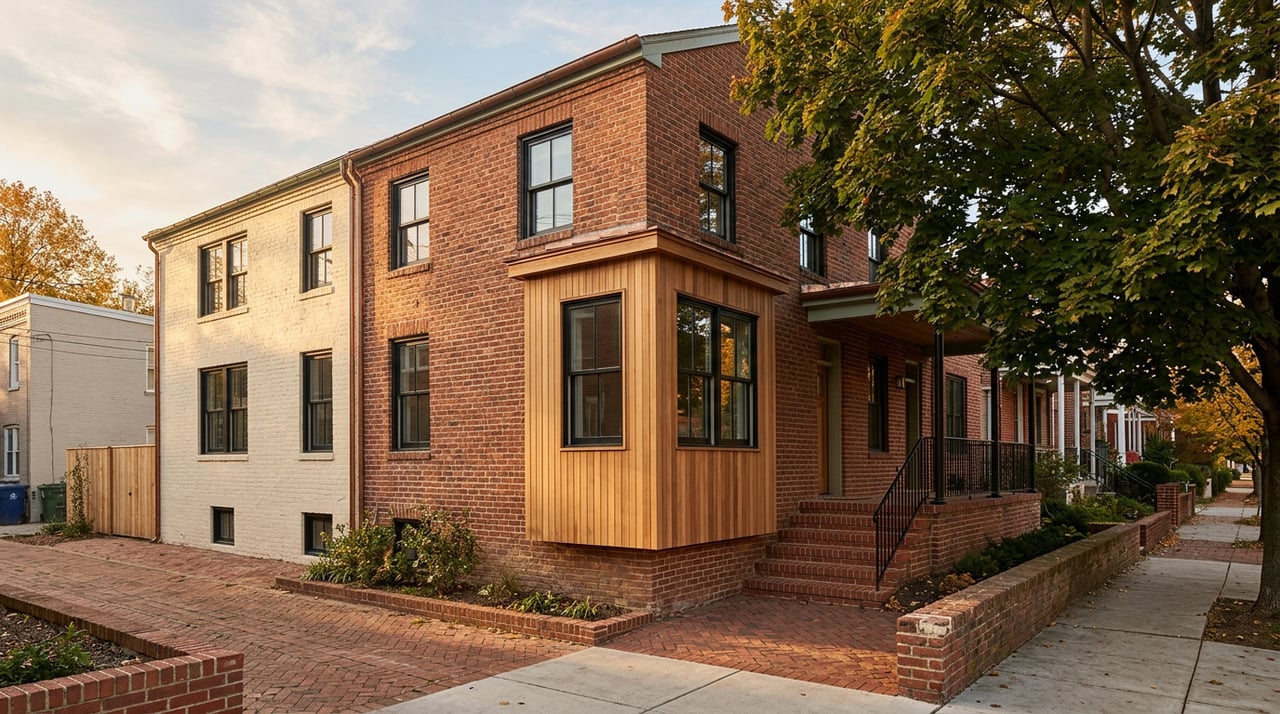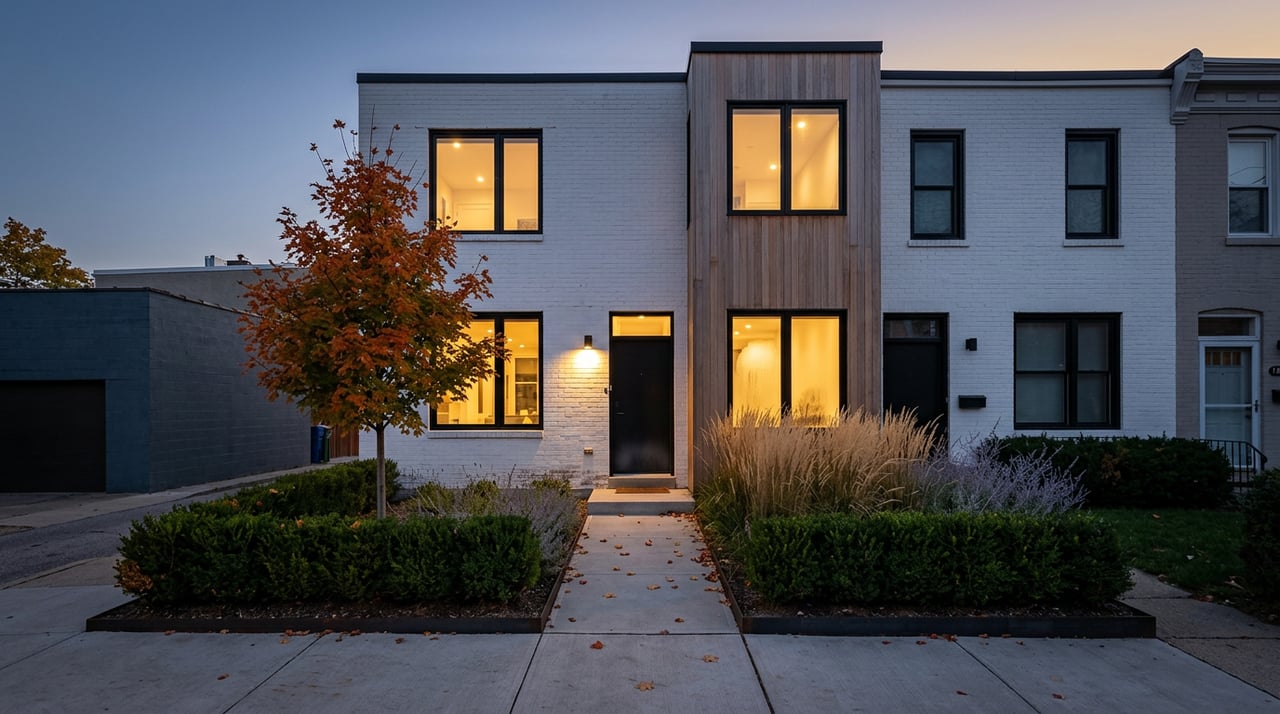

On March 3, 2026, a bungalow at 1696 South Downing Street closed for $550,000. Twelve weeks later, on May 26, a five-bedroom two blocks over on South Corona Street closed for $2,510,000. Both sales happened inside Platt Park. Both closed in the same spring season, in a neighborhood that spans roughly 100 blocks between I-25, Evans, Broadway, and Downing. Neither is a fluke the market explains away. Between them sits most of what a "median" is trying to describe.
Ask six different sources what a home in Platt Park costs right now and you will get six different answers, and not the small kind that comes from rounding. One national portal's 30-day window ending in late May 2026 put the median sold price at $1,084,500, up 11.2 percent year over year, drawn from twelve closings. A competing Denver brokerage's own April 2026 report showed a median of $1,275,000, up 30.8 percent, drawn from seven. A local buyer's guide citing a national listing aggregator's April 2026 figures showed a median sold price of $795,000, with a separate tracker landing at $802,325 the same month. Meanwhile a portal's trailing twelve-month figure for the neighborhood put the median at $910,000, down 3 percent, and its narrower cut of two-story homes specifically showed $900,000, down 5 percent.
Read those side by side and the neighborhood appears to be doing four different things at once: up 30 percent, up 11 percent, down 3 percent, down 5 percent, all inside the same handful of months. None of these sources made an error. They are each describing a different sample, and in a market this small, the sample is the story.
Why the median breaks when the sample is this small
Platt Park does not sell homes at scale. The counts embedded in the reports above tell you that directly: seven closings in one April, twelve in a thirty-day window that spring. A neighborhood moving seven to sixteen homes a month has no room to average away an outlier, because there usually isn't a big enough group to call anything an outlier in the first place. One $2.5 million custom build and one $550,000 fixer are, statistically speaking, most of the data.
This is different from a market where medians move slowly because volume is high enough to smooth out any single transaction. In a thousand-sale market, a $2 million estate barely nudges the number. In a market selling single digits to low teens per month, that same sale can single-handedly produce a headline that says prices jumped 30 percent, when what actually happened is that April's closings happened to skew toward new construction.
Denver's own neighborhood planning assessment, drafted when the city was studying Platt Park's building patterns, described the area at the time as one where the "scrape-off" phenomenon was not yet significant, while noting the potential for it to grow. The same assessment pointed to the neighborhood's zoning and the Washington Park view plane as the reason bulk and height were not yet pressing concerns. Those height controls are still the reason new construction here reads as wider and better finished rather than taller. Builders cannot compete on stories, so they compete on lot coverage, materials, and square footage instead, which is exactly the kind of premium product that can swing a monthly median hard when even a couple of them close.
What actually sits between $550,000 and $2.51 million
The spread is not random. It maps to a fairly clean set of product tiers, and the closed sales from this spring lay them out almost too neatly.
At the entry end, the Downing Street corridor produced two spring closings in the mid-$500,000s to $700,000s: the $550,000 sale on March 3 and a $740,000 sale a day earlier on the same street, the latter a 1,390 square foot home. Both are smaller, older houses. This is the unrenovated or lightly updated bungalow tier, the segment most likely to interest a first-time buyer or a buyer weighing whether to add an accessory dwelling unit down the road. One recent Platt Park listing showed an ADU on the property historically renting for $2,700 a month, which is real income potential, but anyone who has actually built one in this part of Denver will tell you the line item that surprises people is not the structure itself. It is the alley. Century-old lines, sloped grades, and access issues can add real cost once utility coordination starts, and a realistic permit-to-completion window runs eight to twelve months, longer if the property triggers landmark review.
A step up, a pending sale on South Humboldt Street at $895,000 for a 2,424 square foot home represents the middle tier: a renovated or larger-format bungalow, not a teardown candidate, not new construction either.
At the top, three spring closings on Downing and Corona Streets, at $1,485,000, $1,900,000, and $2,510,000, all fell in the 4,000 to 4,500 square foot range. These are the new-construction and full-scale remodel product, the homes that anchor the higher medians reported by the sources counting fewer, pricier sales that month.
Any given thirty-day window is going to lean toward one tier or another almost by chance, and that lean is what shows up as a swing in the headline number.
The corridor is not standing still either
The commercial spine of the neighborhood is also seeing redevelopment. In July 2026, a local development firm called Outwest Investments filed plans for a new two-story building at 1550 South Pearl Street, ground floor restaurant space, second floor offices, replacing a 1963-era building the firm purchased that spring for $1.6 million. A few blocks away, Kentro Group has proposed a five-story mixed-use building at the corner of Louisiana Avenue and South Pearl Street, roughly 170 rental units above office and ground-floor retail space, designed to fit inside the 64-foot height limit that applies to that parcel. Reporting has also tied a Trader Joe's liquor license application to that same corner. None of this is finished. These proposals would add density and commercial activity to the corridor; new-construction residential product has also been landing nearby.
What this means for how you read a listing
If you are comparing Platt Park to other close-in Denver neighborhoods, the headline median is close to useless on its own. What matters more is the question behind it.
- How many homes actually sold in that window, and does the source say?
- Is the reported figure describing bungalow-tier product, new construction, or both mixed together?
- Where does this specific home sit relative to Old South Pearl Street and the light rail, since that proximity is where new-build product concentrates?
- If the home has ADU or scrape-off potential, has anyone priced the alley and utility work, not just the structure?
A single closing can move next month's reported median by six figures in either direction. That is not a flaw in the data. It is what happens in a market small enough that every sale is a meaningful fraction of the sample.
FAQ
Is Platt Park actually appreciating or not right now? Depending on which report you read, the year-over-year figure for 2026 ranges from down 5 percent to up more than 30 percent. Both readings are accurate for the specific set of closings each source counted. Neither one describes the whole neighborhood, because the whole neighborhood in a given month is often fewer than fifteen sales.
Why does new construction command such a premium here? Height limits tied to the neighborhood's zoning and the Washington Park view plane keep new builds from adding stories, so the premium comes from lot coverage, finish level, and square footage instead. The recent closings above $1.4 million all landed in the 4,000 to 4,500 square foot range.
What should I actually ask before comparing a Platt Park listing to the median? Ask for the sale count behind the figure and the product mix it represents. A $1,275,000 median built from seven sales tells you something very different than a $900,000 median built from a full year of closings.
Numbers this volatile are exactly why a local read matters more than a headline figure. If you are trying to work out what a specific Platt Park block, block face, or property type is actually doing this season, Stephanie Vail can walk through the current inventory with you and help you read past the median to the home in front of you. Book a consultation to start that conversation.
This article is general information, not legal, tax or financial advice. Consult a qualified professional about your situation.