
If you've started googling how long it takes to sell a house you inherited in Denver, you've already noticed the problem. One site says three to six months. Another says six to twelve. A third says nine to twenty-four. None of them are lying to you. They're describing different things and calling it the same clock.
For a family sitting on a Berkeley bungalow that belonged to a parent or grandparent, that inconsistency isn't academic. It's the difference between listing in the spring and still waiting in the fall. And the timeline question, once you actually dig into it, turns out to be the wrong question. Colorado probate court is rarely the thing that decides when your closing date lands. For a lot of Berkeley properties, something else gets there first: the sewer line, the disclosure form, or a preservation review most people don't know exists until they're standing in the middle of it.
The number nobody agrees on, and why
Colorado uses the Uniform Probate Code, which is generally friendlier and faster than states with heavier court oversight. Most residential estates go through informal probate, where a court official called a registrar reviews the paperwork and a hearing usually isn't required. Under that track, one estate settlement guide puts the typical range at six to twelve months, while another quotes six to eighteen months for the process overall.
But two numbers inside that range are not estimates. They're statute.
Colorado requires a mandatory four-month creditor claim period, during which the estate has to publish notice and give creditors a chance to file claims. On top of that, every Colorado probate case, informal or formal, has to stay open a minimum of six months before it can close. Those two rules set the floor. A family can have a completely uncontested estate, a cooperative set of heirs, and a personal representative appointed within weeks, and the estate still cannot close before that six-month mark.
That's the part most timeline guides skip. They quote a range as if it's a forecast. It's closer to a guarantee, at least on the low end.
There's a second wrinkle specific to real estate. Colorado's small estate affidavit, which lets heirs collect personal property without opening a full probate case, is capped at $88,000 for 2026 deaths, and it explicitly cannot transfer real property no matter how small the rest of the estate is. A Berkeley home doesn't get to skip probate because the estate otherwise qualifies as small. The house itself is what forces the full process.
What you don't know can still cost you
Once a personal representative has Letters Testamentary or Letters of Administration in hand, they can list the property. Here's where the second clock starts, and it runs on a completely different mechanism than probate court.
Colorado's Seller's Property Disclosure form, the one every residential sale requires, asks the seller to report the property's condition to their "current actual knowledge." The Colorado Division of Real Estate is specific about what that phrase means in its own guidance: a seller cannot disclose what they genuinely don't know, and current actual knowledge means exactly that, as far as the seller knows, not what a diligent owner should have known.
That standard behaves differently for a personal representative than it does for someone who's lived in the house for thirty years. An heir who never occupied the property may legitimately have less to disclose. But that cuts both ways. If a personal representative learns something during the process, a sibling mentions the basement flooded in 2019, or a contractor doing prep work finds knob-and-tube wiring, that knowledge becomes disclosable the moment it's acquired. Colorado law also layers on a common law duty to disclose known latent defects that materially affect value, separate from whatever box is or isn't checked on the form. The paperwork doesn't pause while the estate figures out what it knows. It updates in real time.
The bungalow's other clock
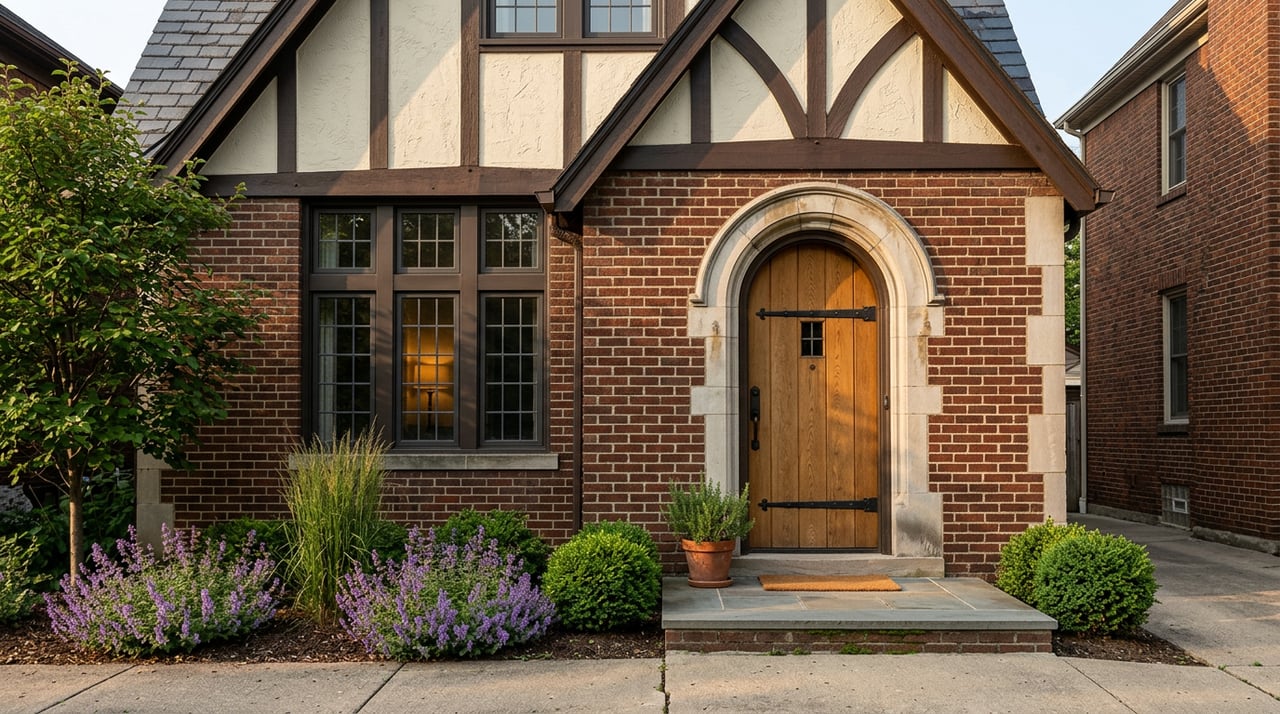
Berkeley's housing stock is part of what makes the neighborhood distinctive: Craftsman bungalows and Denver Squares dating to the early 1900s, mixed with Tudors and newer infill. It's also exactly the housing stock where a sewer scope tends to surface the deal-complicating discovery.
Denver's older sewer lines are commonly clay tile or cast iron, and the city's mature tree canopy means root intrusion at pipe joints is the most frequent finding on these inspections. As of July 2026, a sewer line camera inspection in the Denver metro area runs an average of $748, with a typical range of $151 to $1,359. Many homes in the city have original lines 45 years old or older. The inspection itself is inexpensive. What it finds is the variable. As of May 2026, repairs for a compromised line commonly run $3,000 to $15,000 or more, depending on length, depth, and how much of the line needs replacing.
For an estate sale, this matters in a specific way. The personal representative usually hasn't lived in the house and often doesn't know the sewer line's condition any better than the buyer does. A scope pulled during the buyer's inspection period can turn into a negotiation that has nothing to do with probate court and everything to do with a hundred-year-old pipe under the front yard.
The clock nobody explains until you hit it
Some Berkeley estates aren't planning to sell the house as-is. Larger lots in the neighborhood have drawn scrape-and-rebuild interest for years, and an estate weighing that path runs into a third clock entirely, one that has nothing to do with a courthouse.
Denver requires a Certificate of Demolition Eligibility review before a permit is issued for older structures, and in Berkeley, that review doesn't happen in a vacuum. Historic Berkeley Regis, a community group that has studied the neighborhood's history and architecture since 2016, actively tracks these applications and weighs in on them. The group's own site documents a recent case at 4586 N Tennyson Street, where a property owner applied for a Certificate of Demolition Eligibility and city staff reviewed the building's history and architecture as part of that application.
That kind of review runs on a timeline that has nothing to do with probate court or the buyer's inspection period. It's not a step most executors think to ask about until they're already committed to a path that assumes it away.
Which clock actually wins
Here's the pattern across the three tracks:
| Track | What starts the clock | What actually resolves it |
|---|---|---|
| Probate court | Death of the owner, filing the petition | Four-month creditor period plus six-month statutory minimum, regardless of how simple the estate is |
| Property condition | Buyer's inspection period, once listed | Sewer scope, deferred maintenance, and disclosure updates as the personal representative learns more |
| Preservation review | Filing a demolition eligibility application | Denver planning staff findings, informed by neighborhood groups like Historic Berkeley Regis |
Most executors plan around the first column because it's the one every article talks about. The second and third columns are the ones that actually catch families off guard, because nobody mentions them until the transaction is already moving.
A few questions worth asking early, before a home hits the market:
- Has anyone had the sewer line scoped, or is that information the estate genuinely doesn't have yet?
- Is there any chance the eventual buyer, or the estate itself, might consider demolition or major redevelopment?
- Who among the heirs actually lived in or visited the house recently enough to know its condition, and has that knowledge been captured before the disclosure form is signed?
A few direct questions
Do all the heirs have to agree before the house can be listed? No. The personal representative has the legal authority to sell as part of settling the estate. Keeping heirs informed is wise and often necessary for a smooth process, but their consent isn't a legal requirement for the sale itself.
Does Colorado tax the sale or the inheritance? Colorado has no state estate tax or inheritance tax. Federal estate tax only applies to estates well above the federal exemption, which rarely touches a single Denver home.
Can the house be listed or sold before probate fully closes? Often, yes. Once the personal representative has been granted Letters Testamentary or Letters of Administration, they typically have authority to list and even close on a sale before the estate is fully settled, as long as the title company's requirements around authority and creditor claims are met.
If you're the executor, heir, or personal representative facing a Berkeley property and you'd rather have a clear read on which of these clocks is actually running against you before you list, Stephanie Vail has spent years walking Denver families through exactly this kind of transition, with the patience the process deserves. Book a consultation and get a straight answer before the next deadline sneaks up on you.